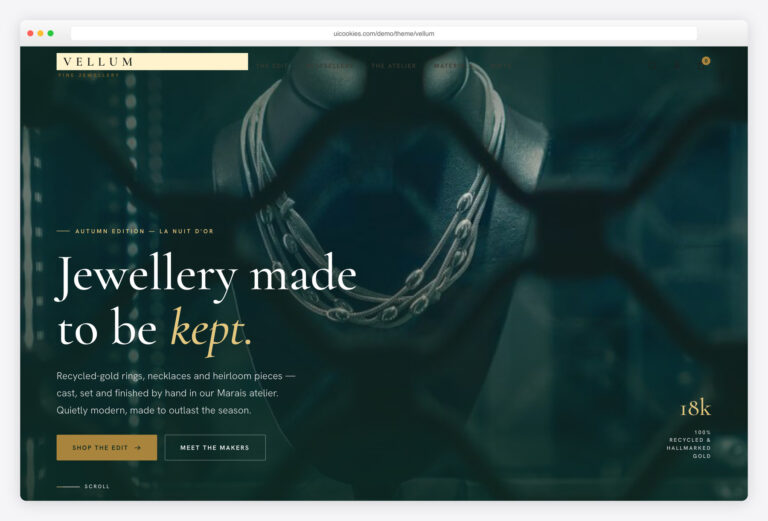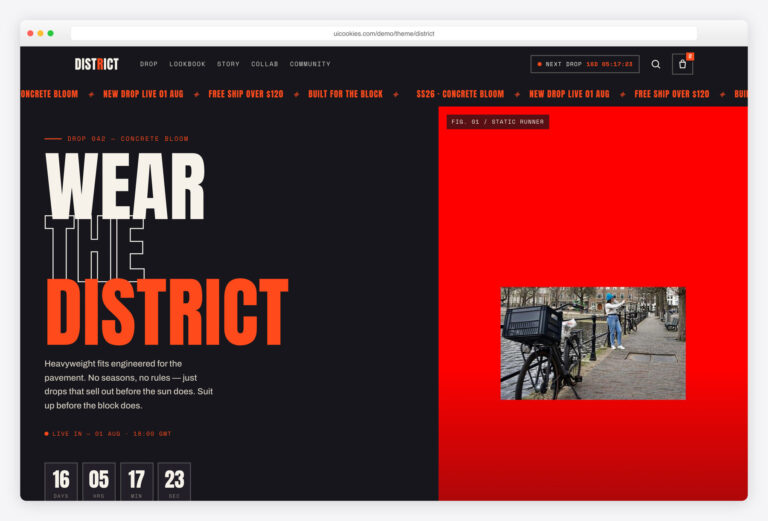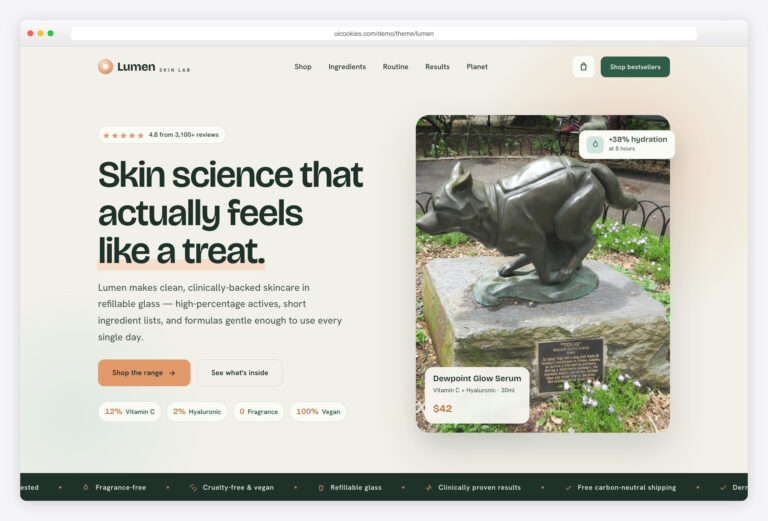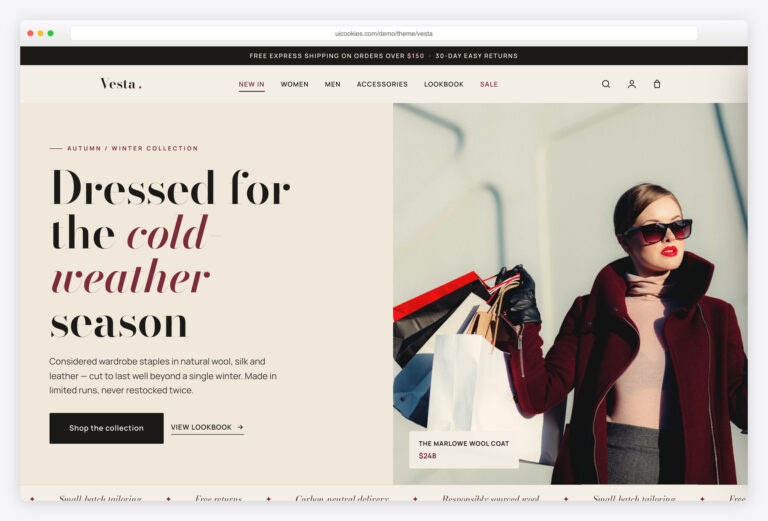

Maison — Free Fashion Brand & Lookbook Website Template
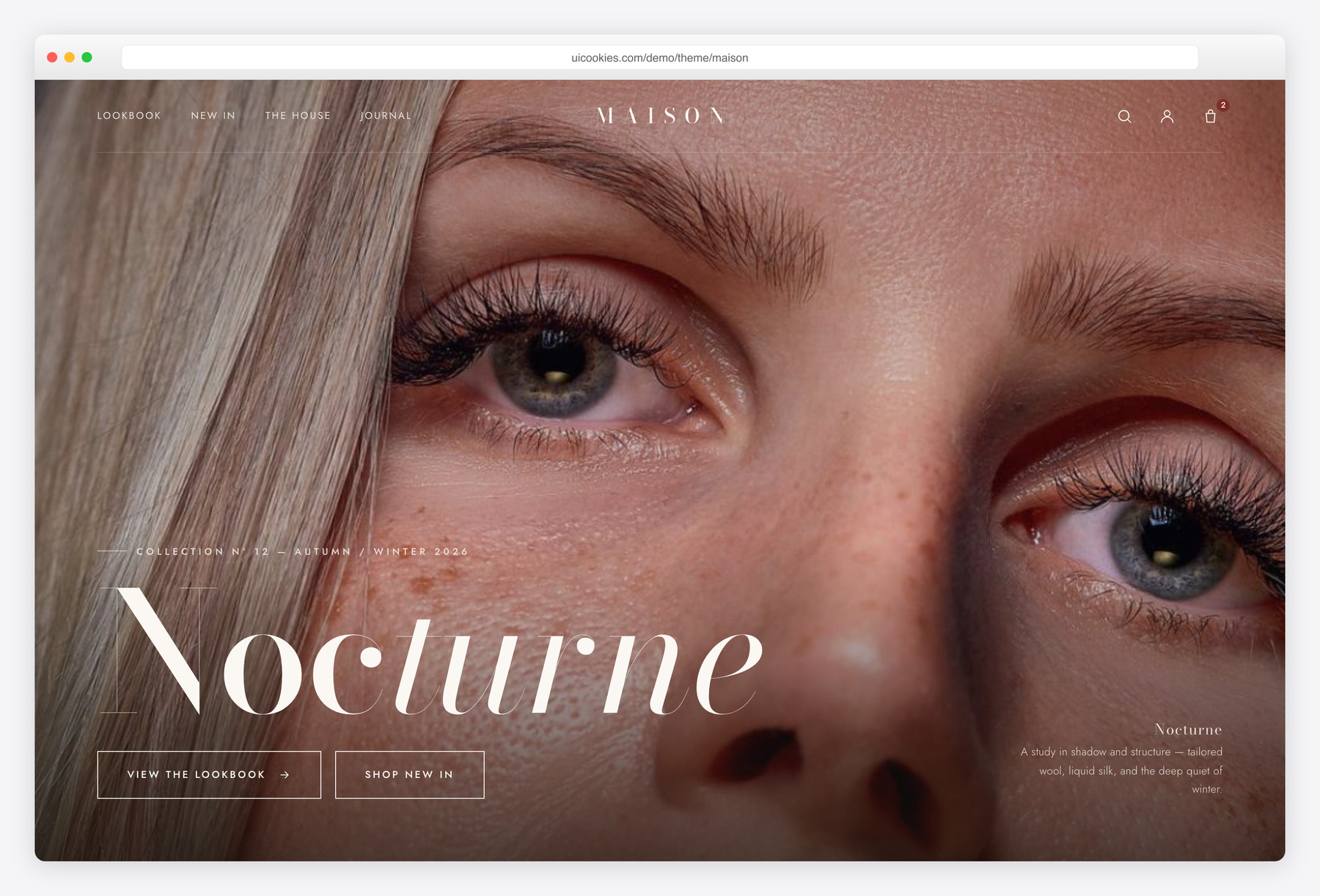
Maison is a free single-page Bootstrap 5 template built around a seasonal fashion lookbook instead of storefront chrome. It leans on an asymmetric, filterable look gallery, a full-bleed editorial hero, and a high-contrast Bodoni Moda + Jost type pairing on a warm porcelain-and-espresso palette. Every interaction is hand-written vanilla JavaScript with no jQuery, so it drops cleanly onto a strict-CSP host.
Key features
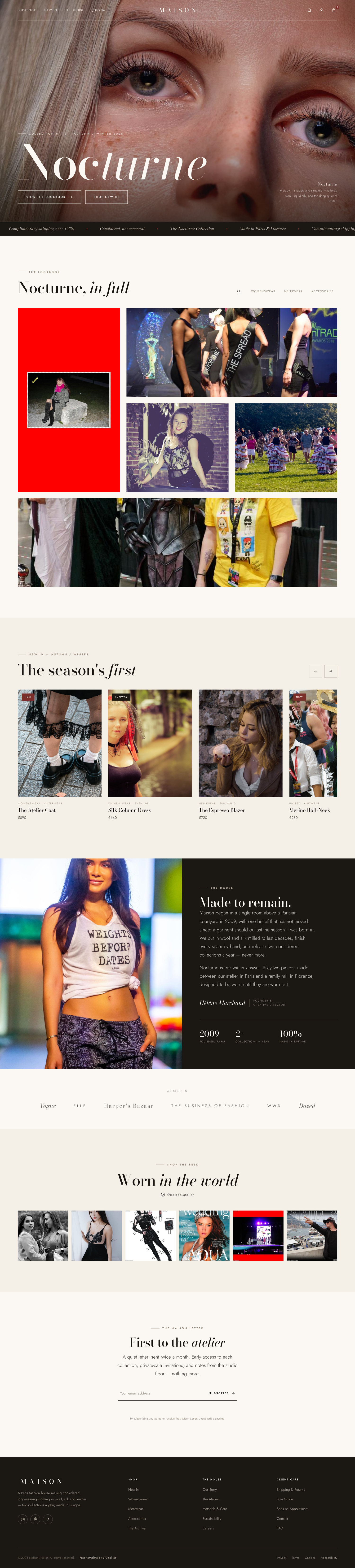
- Asymmetric lookbook grid with live category filtering (Womenswear / Menswear / Accessories)
- Full-bleed editorial hero with a running house marquee and layered display headline
- Scroll-snap "new in" collection row with prev/next controls and hover quick-add
- Add-to-bag micro-interaction that updates the header cart count
- Editorial split section with founder manifesto, signature and house stats
- Shoppable Instagram-style grid with hover like-counts and feed link
- Press "as seen in" strip built from styled wordmarks, no logos to license
- Newsletter block with real front-end email validation and status messaging
- IntersectionObserver scroll-reveal plus full prefers-reduced-motion support
Best for
- Modern fashion houses and clothing brands
- A seasonal collection or lookbook launch
- Editorial, whitespace-led brand landing pages
- Designers wanting a jQuery-free, CSP-clean base
At a glance
- Framework: Bootstrap 5
- License: Free for personal and commercial use
- Pages: 1 (single-page)
- Responsive: Yes
- Style: Editorial high-fashion, whitespace-led, Didone + geometric-sans
How to use it
Download the ZIP, unzip it, and open index.html — no build step, nothing to install. Edit the text and images, point any forms at your backend or a form service, and deploy the folder to any static host. Colours and fonts live in css/style.css; the interactions are in js/main.js.
Frequently asked questions
Is Maison free to use commercially?
Yes. Maison is free for both personal and commercial projects. You can use it for a real brand launch or client work at no cost, with no license fee.
Is it really just a single page?
Yes. It is one long-scroll landing page covering the hero, lookbook, new arrivals, house story, press strip, social feed and newsletter. Everything a seasonal brand launch needs lives in a single index.html, with no secondary pages to wire up.
Do I need a build step, npm, or a framework?
No. Bootstrap's CSS and JS bundle are self-hosted in the template, fonts load from Google Fonts, and all behaviour lives in one plain js/main.js file. Open index.html in a browser and it works as-is.
Can I edit it without knowing how to code?
Mostly. Swapping copy is just editing text directly in index.html, and replacing the photos means dropping your own files into the img/ folder. Rearranging sections or changing interactions does require some basic HTML and CSS comfort, but no build tools or JavaScript knowledge.
How do I change the colours and fonts?
The palette lives in CSS custom properties at the top of css/style.css, so editing a few variables recolours the whole template. The type pairing is Bodoni Moda for display and Jost for UI, loaded from Google Fonts in the head of index.html, which you can swap for your own faces there.
Is it responsive and mobile-friendly?
Yes. The layout is built on Bootstrap 5's responsive grid and adapts from desktop down to mobile. On smaller screens the navigation collapses into a full-screen overlay menu, and the fixed header turns solid on scroll for legibility.
How does the lookbook filter work, and can I add my own looks?
The filter reads a data-cat attribute on each look card, so it sorts items into Womenswear, Menswear and Accessories with no extra setup. To add a new look, copy a card, point it at your image, and give it the matching data-cat value and it slots straight into the grid and filters.
Can I use it as a real online store?
Not out of the box. Maison is a front-end brand and lookbook template, so the cart, add-to-bag and product links are demo interactions with no payment processing. To actually sell, wire the product cards and bag counter to your own commerce backend such as Shopify, WooCommerce or a headless API.