
Resto – Free Restaurant Responsive Bootstrap Website Template
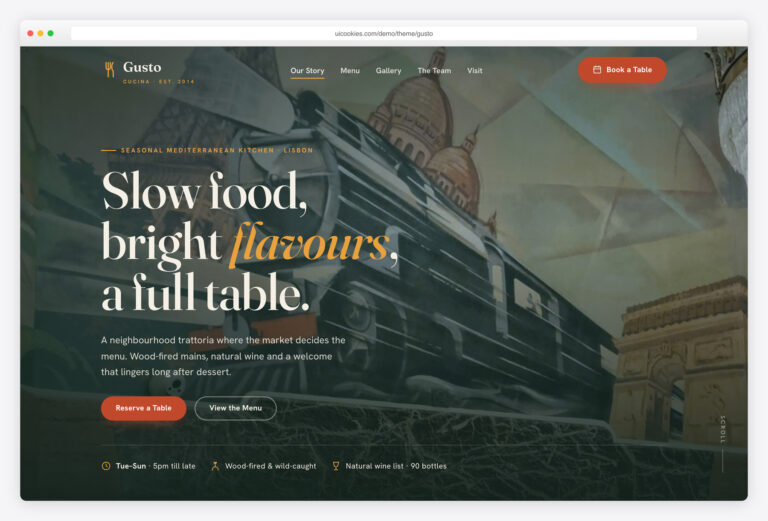
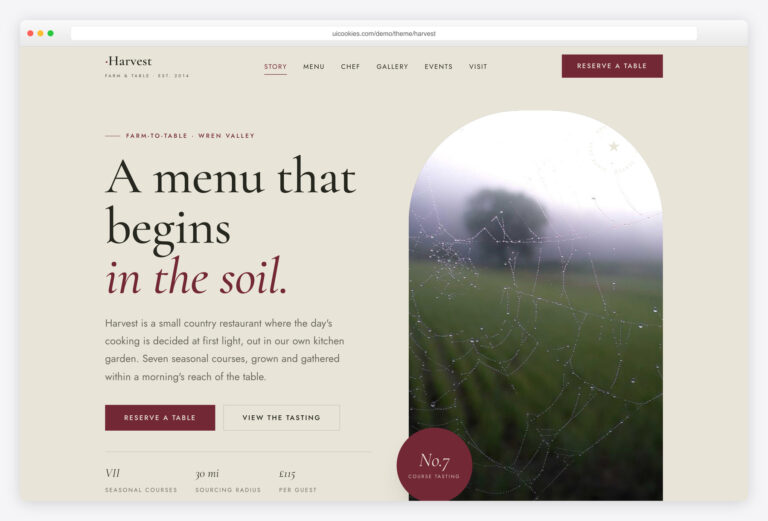
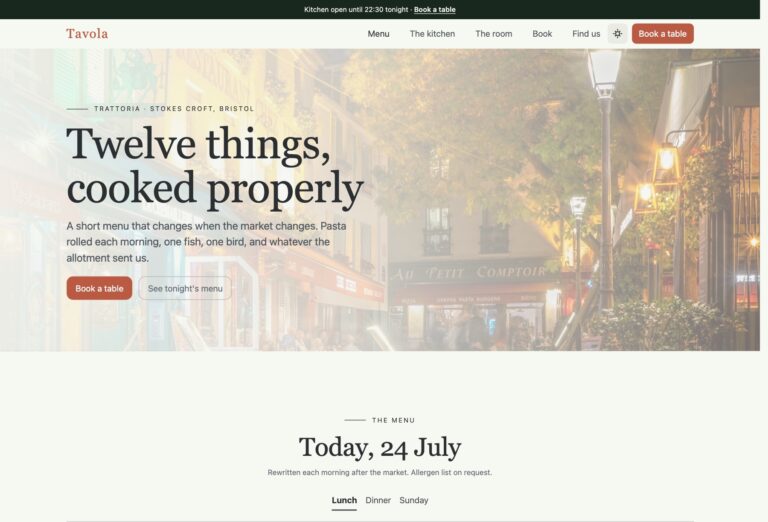
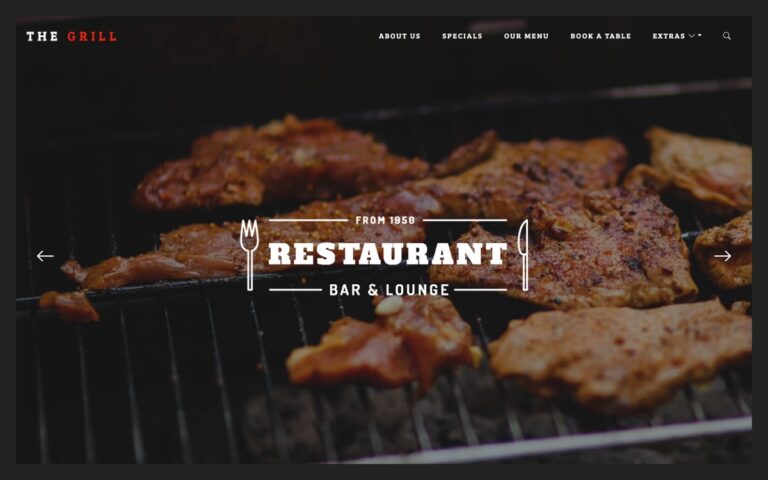
Resto is a free, single-page restaurant website template built on Bootstrap 5 and designed in-house by uiCookies. It ships completely jQuery-free — the hero slider, scroll animations, scrollspy, and reservation form all run on plain vanilla JavaScript with native date and time inputs instead of picker plugins.
Key features
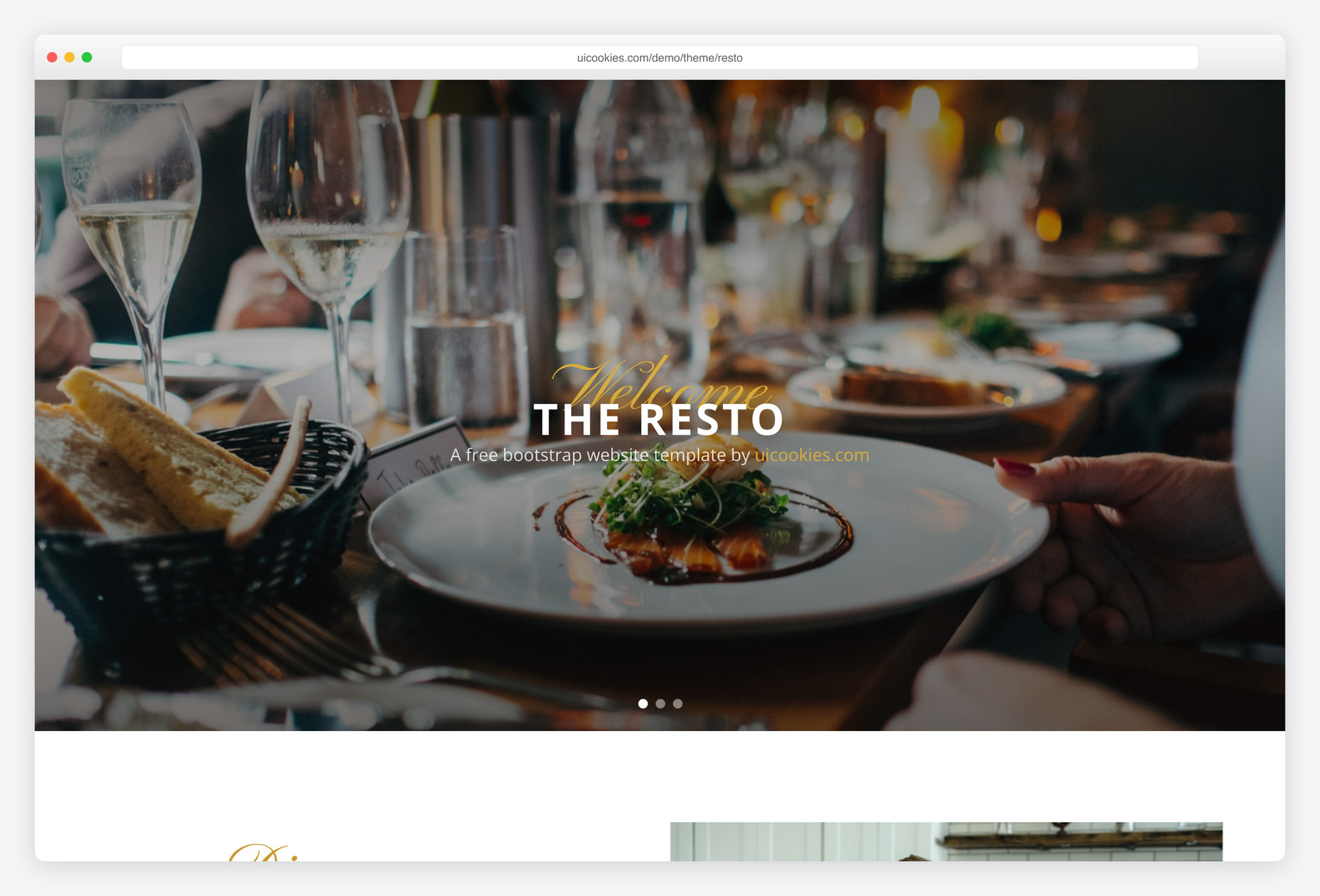
- Full-screen hero slider — three slides, fade transitions, dot navigation
- Reservation form with native date and time input fields
- Priced menu grid with dish thumbnails, grouped for scanning
- Specialties rows pairing images with kitchen story copy
- Events and testimonials sections for private-dining and guest quotes
- Contact and footer with hours, address, and social links
- Vanilla JS hero slider with reduced-motion support
- IntersectionObserver scroll animations, scrollspy, and smooth scrolling
- SCSS source files included alongside the compiled CSS
Best for
- Independent restaurants, cafes, and bistros
- Venues that need an online reservation request form
- Menu-forward sites that show dishes with prices
- Anyone wanting a lightweight, plugin-free Bootstrap 5 base
At a glance
- Bootstrap 5 — no jQuery, no slider or datepicker plugins
- Vanilla JS hero slider with reduced-motion support
- IntersectionObserver scroll animations, scrollspy, smooth scrolling
- Native date/time reservation inputs
- Single page + SCSS sources included

How to use it
Download the ZIP, unzip it, and open index.html — no build step, nothing to install. Edit the text and images, point any forms at your backend or a form service, and deploy the folder to any static host. Colours and fonts live in css/style.css; the interactions are in js/main.js.
Frequently asked questions
Is Resto free, and can I use it for a client's restaurant?
Yes. Resto is free and follows the standard uiCookies license, which covers both personal and client projects. Attribution is optional but always welcome, and the full terms are at uicookies.com/license. There is no separate paid tier for this template.
Do I need a build tool or coding skills to edit it?
No build step is required to launch the site — the compiled CSS ships ready to use, so you can edit the HTML directly and open it in a browser. Basic HTML knowledge helps for swapping menu items, prices, and photos. SCSS source files are also included if you prefer to recompile the styles.
How do I change the colours and fonts?
Colours and typography are defined in the SCSS sources included with the download, so you can adjust the variables there and recompile. If you'd rather not use SCSS, you can override the same values directly in the compiled stylesheet. Either route lets you rebrand without touching the markup.
Does the hero slider need a plugin?
No. The three-slide hero is roughly forty lines of vanilla JavaScript paired with CSS fade transitions — there is no Slick, Owl, or Swiper dependency. It also pauses automatically for visitors who have reduced-motion enabled in their system settings.
How does the reservation form work?
The reservation form uses native HTML date and time inputs rather than a datepicker plugin, which means better mobile keyboards and fewer dependencies. It is a static front-end form, so it captures guest input in the browser but does not send or store bookings on its own. To go live, wire the form action to your own backend, a form service, or a booking provider.
Is the template responsive and mobile-friendly?
Yes. Resto is built on Bootstrap 5's responsive grid, so the hero, menu grid, and reservation form all adapt from desktop down to phones. The native date and time inputs also trigger the correct mobile keyboards on touch devices.
Which browsers does it support?
Resto targets modern evergreen browsers — current versions of Chrome, Firefox, Safari, and Edge. Because it relies on standards like IntersectionObserver and native date/time inputs, it is built for up-to-date browsers rather than legacy ones like Internet Explorer.
What's included, and can I connect it to a CMS?
The download includes a single-page HTML template with all sections — hero, specialties, menu, reservation, events, testimonials, contact, and footer — plus the SCSS sources and vanilla JS. It is a static front-end, with no backend, database, or payment processing built in. You can integrate it into a CMS or backend by porting the markup into your platform's templates yourself.