Every template on this page is designed, built, and maintained in-house by uiCookies — these are our own hotel and resort themes, not a roundup of other people's work. The room galleries, booking widgets, and reservation flows are built the way we'd build them for a real property, and we keep them current.
A good accommodation site does a few things well: it sells the rooms with generous photography, makes availability and pricing obvious at a glance, and gets a guest to the "Book" button in as few taps as possible — especially on mobile, where most hotel and rental searches begin. Clear amenities, a dining or location highlight, and real guest reviews do the rest of the convincing.
All of them are free to download, built on Bootstrap 5 (Lantern on the Bootstrap 6 alpha), and completely jQuery-free, each with a live demo and a direct download — no sign-up wall between you and the files. Pick the structure that matches your property below; Frontdesk, at the end, is the back-office dashboard for running it.
The templates
Lantern
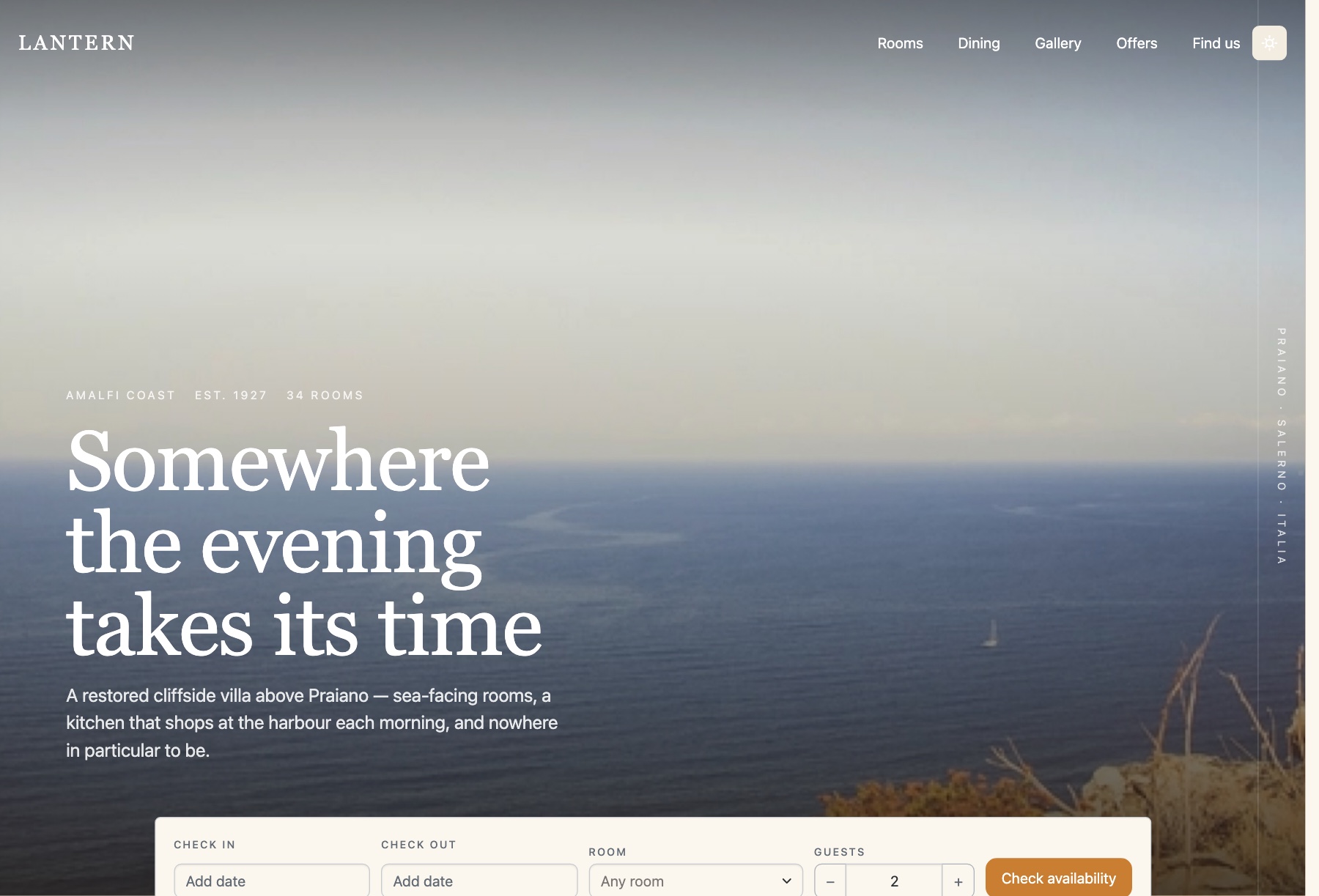
Lantern suits a hotel, guesthouse, B&B or small resort that wants its booking tool in reach from the first screen. The homepage opens on a stay hero that fills the viewport, with a slim vertical meta rail up one edge, then moves through a sideways-scrolling strip of rooms and rates, an amenities section, a dining feature where guests can reserve a table in a dialog, a gallery mosaic, seasonal offers, reviews from past guests, a panel on getting here and an FAQ accordion. A second page covers a single room: a photo set, the room description, in-room amenities and a booking rail that stays pinned as guests read.
Under the hero, the date-range bar pairs check-in and check-out Datepickers with a room-type Combobox and a guest stepper, works out the length of stay as dates change, and docks to the top once scrolled past. Like the table dialog, it sends nothing until you connect a booking engine. Editorial serif type on warm cream, light and dark modes, Bootstrap 6 alpha, ESM-only vanilla JavaScript and no build step.
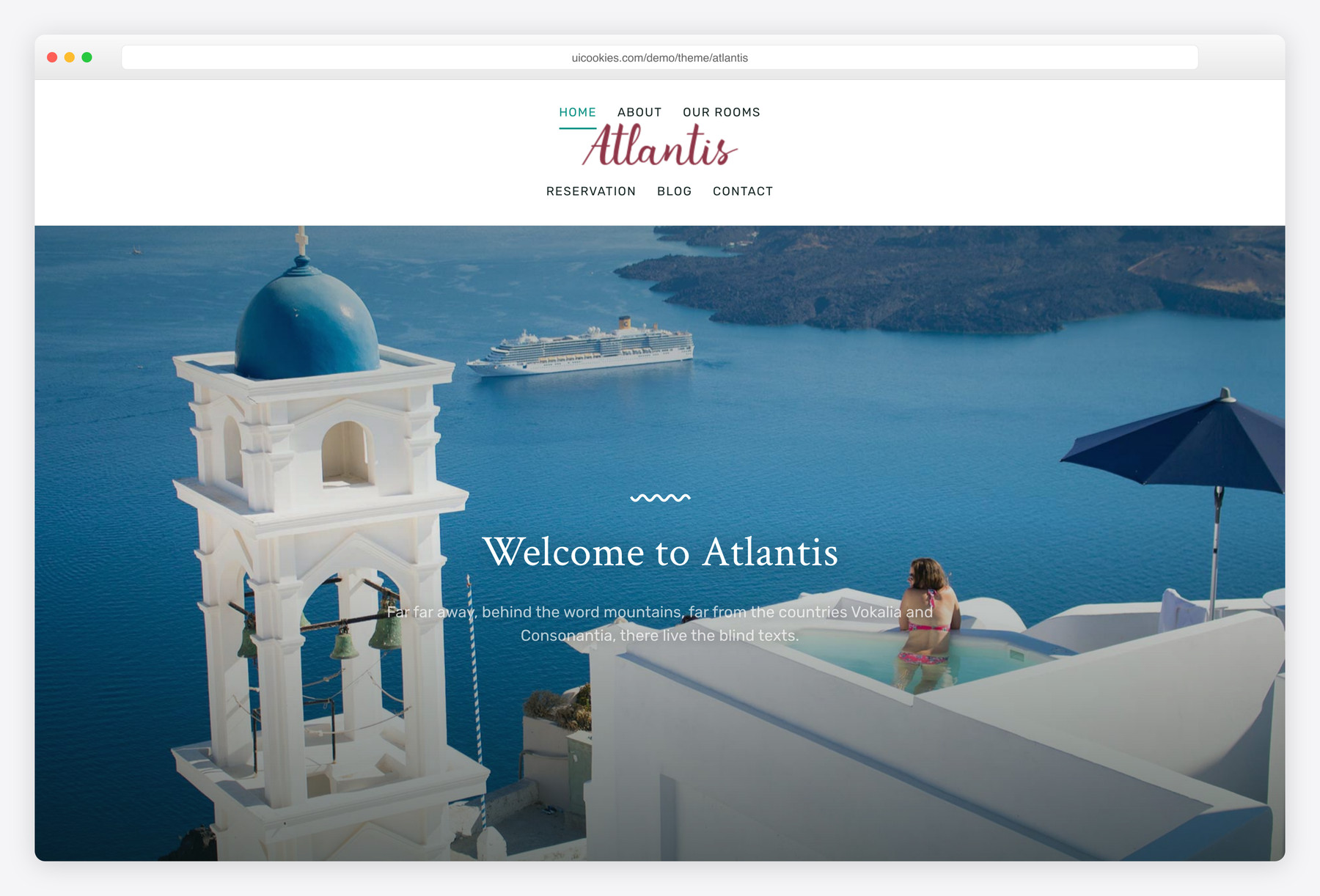
Atlantis
The multi-page option in this collection — a full site with separate Rooms, Reservation, About, Contact, and blog pages rather than one long scroll. Atlantis suits established hotels and resorts that need room to grow: several room types, a spa and amenities section, and a blog for the ongoing content that earns search traffic over time. Built on Bootstrap 5 with no jQuery, it's the dependable, conventional choice when a single page simply isn't enough.
Haven
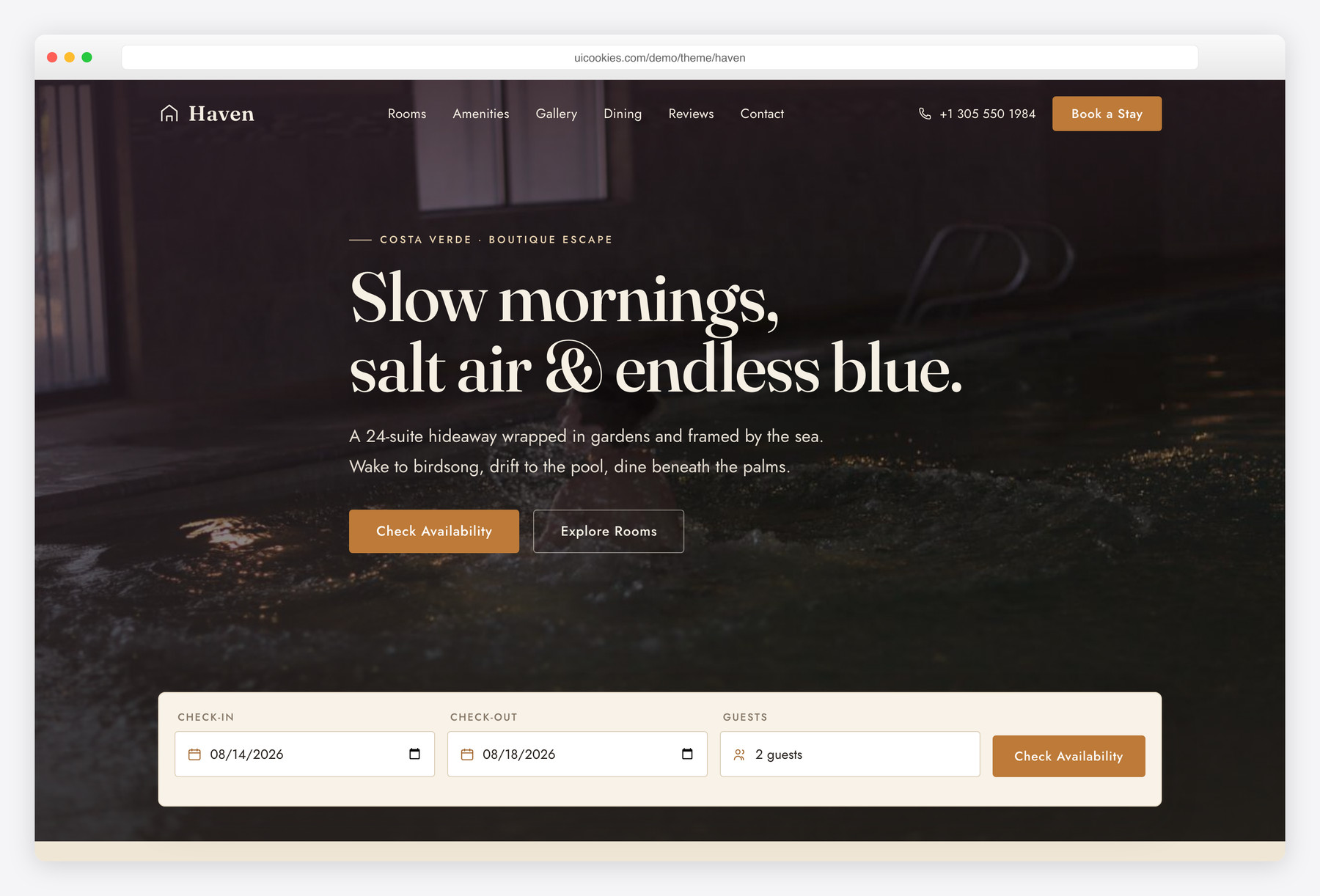
Warm, editorial, and unmistakably boutique — Haven trades the corporate hotel look for a palette of aubergine, sand, and honey-amber that flatters small, design-led properties. Everything lives on one scroll: a full-bleed hero with a live Book-a-Stay date widget, rooms with per-night pricing, a masonry gallery with lightbox, a dining feature, and a guest-review carousel. It's made for B&Bs, guesthouses, and small resorts where the property's own personality is the selling point.
Roost
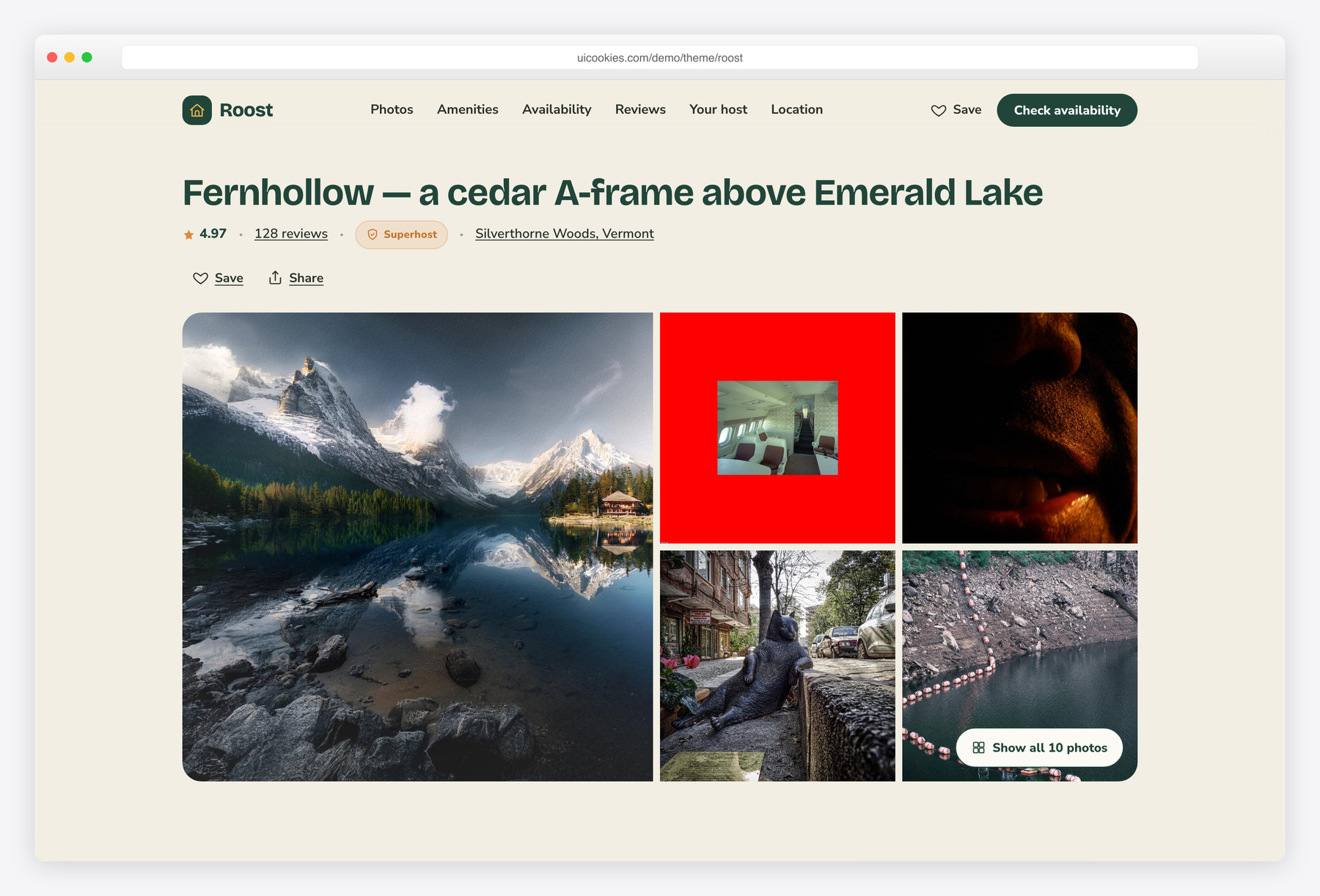
The only single-property listing here, Roost is modelled on a real short-let platform rather than a hotel brochure. A photo-mosaic gallery, an interactive two-month availability calendar, and a sticky booking card that re-prices the stay as guests pick their dates give one cabin, villa, or apartment the polish of a major booking site. Its homey woodland palette of birch, pine, and amber makes it ideal for an independent vacation rental that wants to skip the OTA commission.
Frontdesk
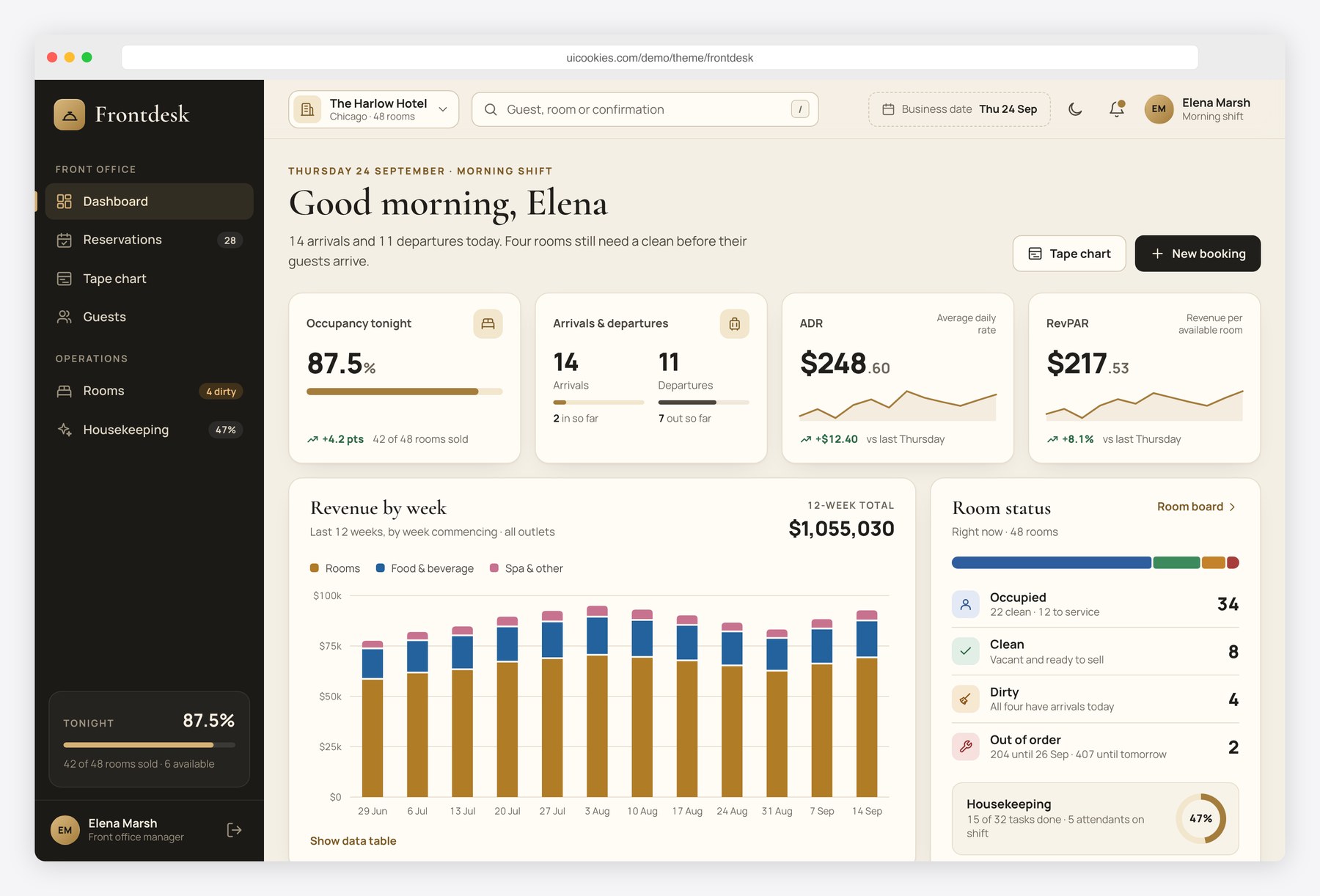
Frontdesk is not a guest-facing hotel website but the back-office companion to the four above: a hotel management system for the staff behind the desk. It is set in a fictional 48-room property, The Harlow Hotel, and covers seven pages: a dashboard with tonight's occupancy, arrivals and departures, ADR and RevPAR, a reservations list with a new-booking form, a 14-night tape chart, a room status board by floor, guest profiles with stay history, housekeeping tasks and a sign-in page. Use it to mock up a property management front end, or as the staff side of an inn, hostel or serviced-apartment business.
The tape chart lays all 48 rooms across 14 nights, filters by floor and room type and opens a booking detail dialog, and it renders from a JSON block you can replace with real PMS data. The booking form totals price, tax, extras and deposit as you type, but saves nothing to a server. Bootstrap 5, vanilla JavaScript, no jQuery, inline SVG charts, light and dark themes.
Compare at a glance
| Template | Best for | Layout | Standout feature |
|---|---|---|---|
| Lantern | Hotels, guesthouses & small resorts with dining | Property homepage + room detail page | Docking date-range booking bar + table reservations |
| Atlantis | Full-service hotels & resorts | Multi-page site with a blog | Dedicated rooms + reservation pages |
| Haven | Boutique hotels, B&Bs, small resorts | Single page, long scroll | Warm design + live date widget |
| Roost | A single vacation rental / short-let | Single-property listing page | Live availability calendar + pricing card |
| Frontdesk | Hotel front-office & housekeeping staff | Seven-page admin dashboard (back office) | 14-night tape chart + room status board |
How to choose
Start by matching the structure to the property, not the styling. One cabin, villa, or apartment is best served by a single-property listing like Roost; a small character-rich place with a handful of rooms wants Haven's single-page scroll; and a full hotel or resort with multiple room types, amenities, and a plan to publish content for SEO needs Atlantis's multi-page layout with its own blog. Don't force a twenty-room resort into a single listing, and don't over-build one cabin into a six-page site — the wrong shell means fighting the template on every edit.
Get the booking flow right, because it's the thing guests came for. These are front-end templates: the date pickers, availability calendars, and pricing cards are real, working UI, but on their own they don't process payments or hold live inventory. Decide early how you'll take an actual reservation — embed a booking-engine or channel-manager widget (Cloudbeds, Little Hotelier, Sirvoy, Lodgify, or your Booking.com/Airbnb script), or at minimum wire the enquiry form to email or a form service so requests reach you. Never leave a demo calendar showing invented availability; someone will try to book it. And keep one unmissable "Book" or "Check availability" call to action above the fold.
Finally, plan for photography, speed, and local search — the three things that actually move accommodation bookings. Nothing sells a room like real photos, so budget for strong hero and gallery imagery, then compress it to AVIF or WebP and lazy-load the gallery so a heavy hero doesn't wreck your mobile load time. Add LodgingBusiness or Hotel schema, keep your name, address, and phone consistent, and drop in a map so you surface in local results. Because every template is plain Bootstrap HTML and CSS with no build step, you can edit copy, swap images, and recolour to your brand by hand — just keep tap-to-call and directions one tap away on a phone.
Lantern sits between Haven and Atlantis. Like Haven it tells the property's story on one long homepage, but it adds a separate room page, a table-reservation dialog and a booking bar that follows guests down the page. Choose it for a hotel or small resort whose restaurant is part of the pitch. If you need a blog or a Bootstrap 5 base, Atlantis and Haven remain the safer picks, as Lantern runs on the Bootstrap 6 alpha and targets only recent browsers (Safari 16.4+, Chrome 111+, Firefox 113+).
Frontdesk answers a different question from the four sites above. Lantern, Atlantis, Haven and Roost face guests; Frontdesk is the staff side, a seven-page dashboard for reservations, the tape chart, room status and housekeeping. Add it when you are prototyping a property's internal tools, or pitching a hotel client both a public site and an admin panel. It runs on the same jQuery-free Bootstrap 5 base as Atlantis and Haven, and like their booking widgets it holds no live inventory until you connect a backend.
Frequently asked questions
Can I use these for a real hotel or rental site commercially, for free?
Yes. Every template here is free to download and use on real, revenue-generating hotel, resort, and rental sites — there's nothing to buy. Attribution is optional but always welcome, and the full terms are at uicookies.com/license.
Do the booking calendars and date widgets actually take reservations?
No — they're working front-end UI, not a payment or inventory system. Connect a booking engine or channel-manager widget, or wire the enquiry form to email, to accept real bookings and show true availability.
Are the templates responsive and mobile-friendly?
Yes. They're built mobile-first on the Bootstrap 5 grid, so the hero, room galleries, and booking cards reflow cleanly down to phone screens — where most accommodation searches actually happen.
Can I edit them without a build tool or coding setup?
Yes. Each one is plain HTML, CSS, and vanilla JavaScript with no build step. Open the files in any editor, change the text and images, and refresh the browser to see it.
Can I connect one to WordPress or another CMS?
They ship as static front-end templates, but the markup is standard Bootstrap 5, so a developer can port the sections into a WordPress theme or paste blocks into a page builder. For details that change often, like rates and availability, use a booking-engine embed rather than hard-coding them.
Will they load fast?
Static HTML with no jQuery is quick by default; your imagery is the main variable. Compress hero and gallery photos to AVIF or WebP and lazy-load the gallery, and the pages stay light on mobile.
Related templates
Free Travel Website Templates · Free Wedding Website Templates · All free HTML website templates